What does a reverse proxy actually do?
The front desk for requests to your application.
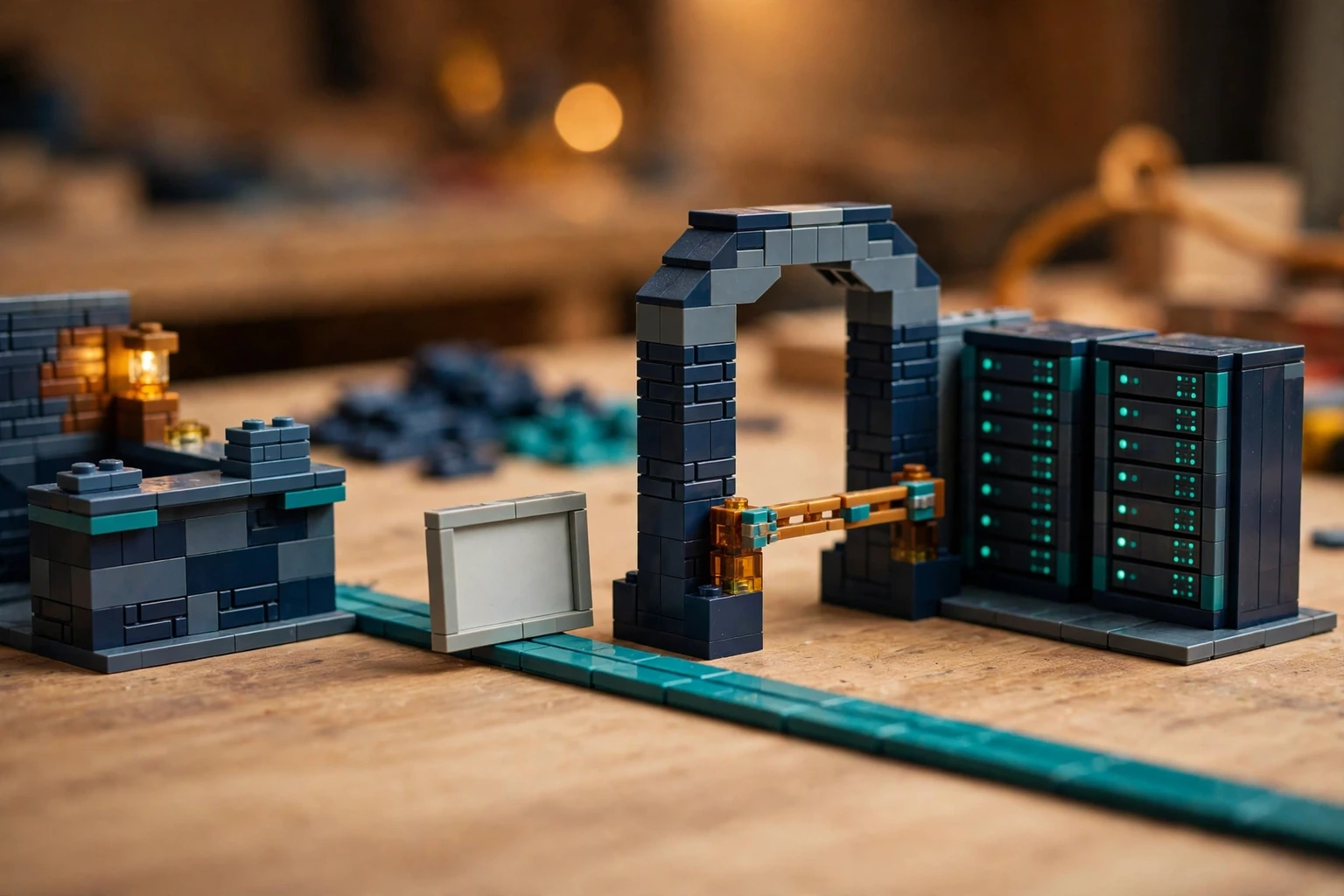
One request. Two connected legs.
Reverse proxy / follow the request, then trace the response back.
Follow the idea
- A browser asks the proxy for the portal.
- The proxy forwards this request to the application.
- The application replies through the proxy to the browser.
Keep the limit visible
Simplified un-cached request. Network layout and TLS termination vary; applications still need their own security controls.
Where does the reply travel?
In this example it returns through the proxy. A cache could serve some requests without a new origin fetch; that is a different path.
“A reverse proxy means the application behind it is secure.”
The proxy is a place to apply configured controls. It does not fix every weakness in the application.Source for this graphic: www.cloudflare.com ↗ · Checked November 7, 2026 · Illustrative example.
The useful picture
A visitor does not always speak directly to the server holding a website. A reverse proxy sits in front, accepts the request and forwards it to a server. The response comes back through that intermediary.
One simple example
Follow the request and response in the interactive brick scene ↗
Illustrative example: a request for a company portal arrives at a proxy. It forwards the request to the application server, then returns the response to the visitor. Depending on the setup, that layer may also handle caching, load balancing or security controls.
Where the analogy stops
The front desk is a mental model, not a guarantee of protection. A reverse proxy only provides the controls it is configured to provide. It does not automatically repair the application behind it.
The next smart question
Which requests pass through it, and which controls are actually enabled?
Independent explanation. No sponsorship or endorsement implied. Product features and policies can change; check the exact product and configuration.
Published .